


- Liberia’s biggest gold miner has felled rainforests, displaced wildlife and poisoned waterways.
- Villagers living in the shadow of its mines say the company has broken promises of jobs, training and healthcare. They have lost crops to forest elephants driven onto farmland and seen their homes destroyed.
- When police cracked down on protests, a pregnant mother said she was beaten. Three were left dead.
- Gold from the mines is in the supply chains of tech giants Nvidia and Apple, two of the world’s three most valuable companies.
- Half of Liberia’s forests now fall under active or latent mining licences — threatening a landscape that is a global conservation priority.
- This article is part of a series on the disappearing forests of West Africa, funded by the Pulitzer Center.
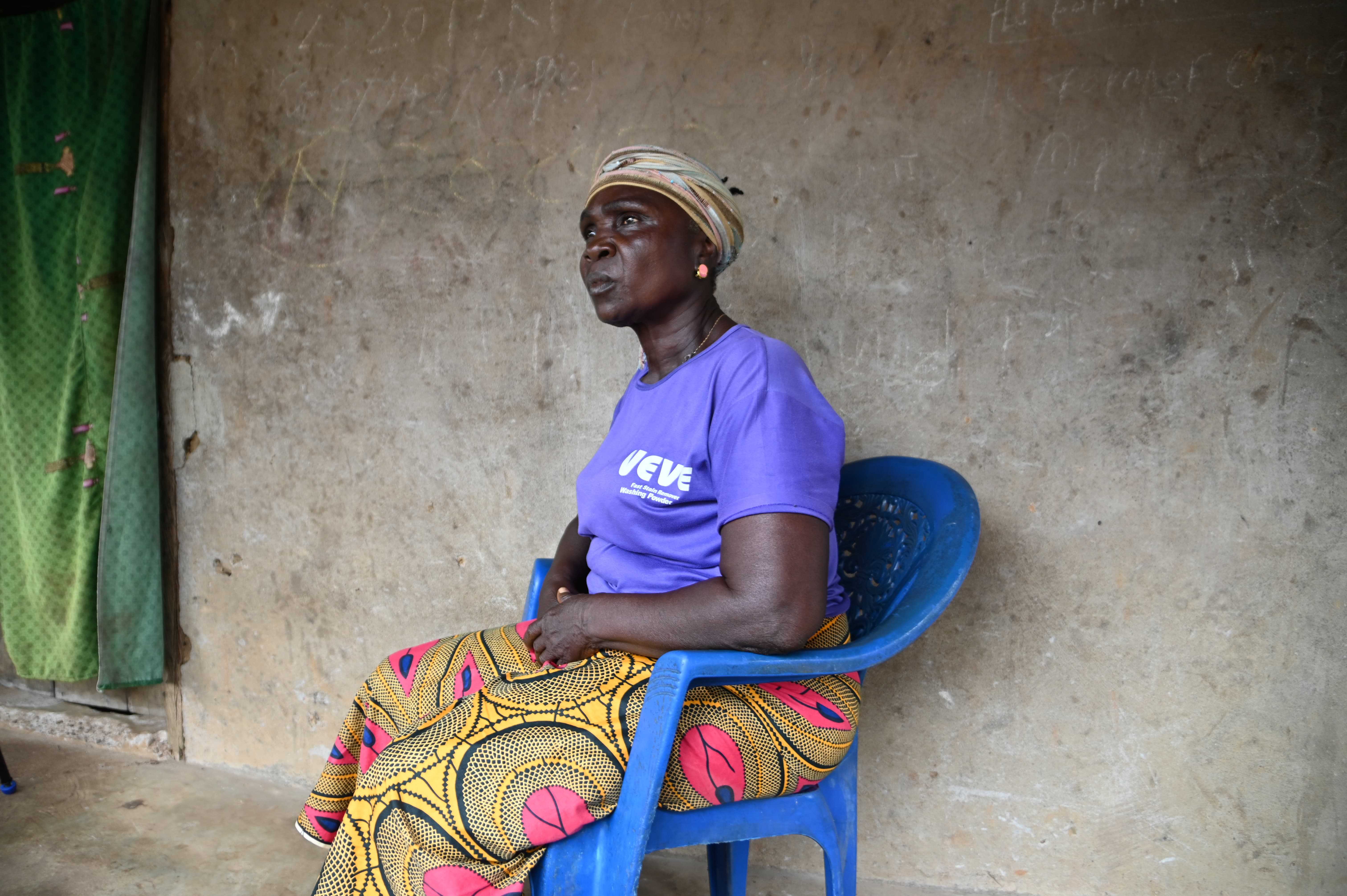
Hawa Massaley was three months pregnant with her first child when the police attacked, she recalls, descending in force on her village deep in the rainforests of western Liberia.
It was February 2024, and Gogoima was in uproar. In its hunt for gold, a mining firm had poisoned local rivers with cyanide, tests had shown. Villagers believed the company had reneged on promises of healthcare and employment. Demonstrations had erupted and a riot police unit was determined to restore order.
Massaley described being kicked and beaten by police demanding to know if she was a protester.
“I told him, ‘I am not part of your protest,’” she recalled, wearing a bright pink dress and sitting on the veranda of a mud hut. “But he was still beating me, kicking me.”
Then she was tear-gassed, she says.
“I fell down and started vomiting,” she said. “When I came to my senses, I was in the clinic.”
She later gave birth to a healthy baby.
Nearby, great-grandmother Satta Surtual said she was cooking outside when the tear gas began falling.
“I saw smoke in the air,” Surtual, a rice farmer, said as she described being struck by a canister. “I felt a sudden ping on my head. The blood was coming down and I fell unconscious.”
Four residents said police fired tear gas into the village at random. Surtual came around in a medical clinic. It was the first such violence she recalled since 1990, during Liberia’s vicious civil war.
The company operating five mining sites here, Bea Mountain Mining Corporation, is Liberia’s biggest gold exporter, according to the most recent public data. Owned since 2016 by the family of a Turkish billionaire, its parent company is registered in Jersey, an island in the English Channel that serves as a tax haven.
Bea Mountain sits at the start of a global trade that connects gold mined in Liberia’s rainforests to the titans of Silicon Valley. Nvidia and Apple, two of the world’s three most valuable companies, list a Swiss refiner named MKS PAMP in their supply chains. MKS PAMP, in turn, sources gold from Bea Mountain.
Three years before the mine began commercial operations in 2016, Bea Mountain entered into a written agreement with the government of Liberia committing to numerous benefits for local communities: access to healthcare, funding development projects chosen by a panel of villagers, and to provide the university and vocational training that would ultimately allow Liberians to take over management of the operations.
But in the villages around its mines, there is a widespread view that it has failed to deliver on these promises. While Bea Mountain exported more than half a billion dollars’ worth of gold over 18 months from its Liberian mines, villagers complain that they have been left with poisoned rivers, crumbling homes, and crops raided by elephants displaced by deforestation.
The forests of West Africa — like those where Bea Mountain operates — are home to a unique array of endangered species, including western chimpanzees, forest elephants and pygmy hippos. But they are under increasing pressure from mining companies.
In Liberia, half of the country’s forests are overlapped by proposed or active mining licences, according to a recent report by non-profit Forest Trends. Bea Mountain has cleared an estimated 2,200 hectares of forest for its operations, according to analysis carried out for this investigation, an area more than six times the size of Central Park.
Some Liberian politicians have argued mining will deliver economic benefits and infrastructure. But the violent unrest in Gogoima and another village nearby points to widespread discontent among rural Liberians living next to mines.
Wilmot Paye served as Liberia’s Minister of Mines and Energy until last October. Responding to the findings of this investigation before he was removed from his post, he said: “We are appalled by the harm being done to our country by mining concessions for the royalties and fringe financial benefits we receive.” He added that the government was reviewing all concession agreements and would change the current concession model, which “only benefits concessionaires.”
About the series: West Africa's disappearing rainforests
This investigation is part of a series on West Africa’s disappearing rainforests by The Gecko Project and The Associated Press, funded by the Pulitzer Center. While the Amazon, Indonesia and Congo Basin are frequently covered by journalists and nonprofits, West African rainforests remain overlooked.
A century ago, the Upper Guinean Forest stretched across 216,000 square kilometres of this region — an area the size of Utah. But much has since been destroyed and forest loss has risen sharply in recent years. Home to species like African forest elephants and chimpanzees, it is recognised as one of the world’s most threatened forest systems and a global conservation priority.
This series explores evidence that politicians and officials in Ghana, Liberia and Sierra Leone are working to undermine what protections remain, opening up fragile ecosystems for mining and luxury developments at the expense of rural communities.
Liberia was founded by Americans two centuries ago for freed slaves. Its institutions and flag are modelled on the USA. But it is one of the world’s poorest countries.
The Liberian economy is now overwhelmingly dominated by mining, which accounts for more than half of its GDP. The two major players are Luxembourg-based ArcelorMittal and Bea Mountain, the latter owned by the Günal family.
The family patriarch, billionaire Mehmet Nazif Günal has interests in construction and energy across Asia and Africa through his conglomerate, the Mapa Group. He is part of the so-called “Gang of Five” — Turkish businessmen who have won many public contracts under strongman ruler Recep Erdoğan. The controlling shareholder of Bea Mountain is his son, Murathan Günal, who also serves as chief executive of Mapa Group.
Mapa Group did not respond to numerous requests for comment for this article.
Bea Mountain’s operations have been lucrative for the Günals – the price of gold has soared in recent years as investors seek a safe haven amid global instability. But only a tiny fraction of the profits reach communities.
Between July 2021 and December 2022, the most recent period for which figures could be obtained, Bea Mountain exported more than $576m worth of gold. It paid the Liberian government $37.8m in tax.
Over the same period, it spent $2m on environmental and social programmes, just 0.35% of its export revenues. Bea Mountain’s Facebook page features images of several school buildings it says it has built or renovated.
By contrast, ArcelorMittal, Liberia’s biggest iron miner, spent a proportion of revenue on such projects ten times higher — some 3.6% of its $477m income.
Liberian newspapers report sporadic instances of Bea Mountain providing roads, water pumps, schools and making cash payments to affected communities. But in the four villages the reporting team visited near the company’s mines, residents said it had failed to deliver on its agreement. They alleged healthcare, education, employment and infrastructure all fell below the standard they expected to receive.


The lack of job opportunities is a key source of anger. The agreement requires Bea Mountain to hire Liberians for unskilled jobs and provide vocational training for skilled roles. It called for the company to support university-level education abroad to equip Liberians to perform accounting, managerial jobs and executive jobs, with the aim that 70% of senior positions would eventually be held by nationals.
Villagers accused Bea Mountain of flying in workers from Turkey, where the Mapa Group is headquartered, and denying them training opportunities. “This is an industrial mining company,” said village elder Abdulai Kawah. “They must be able to provide training.”
In another affected village, some mud-built homes sit just a few hundred metres from Bea Mountain’s mining operations. Many have been cracked or destroyed by shockwaves as the company dynamites nearby hills, according to the villagers.
“We were in the house when we heard the blasting sound — boom — and everyone ran away,” said mother-of-13 Hawa Manubah, standing by the ruins of her former home.
One wall sheared away completely. Nobody was injured, but Manubah’s family cannot afford to rebuild it. “We don’t have anywhere else to live,” she said.
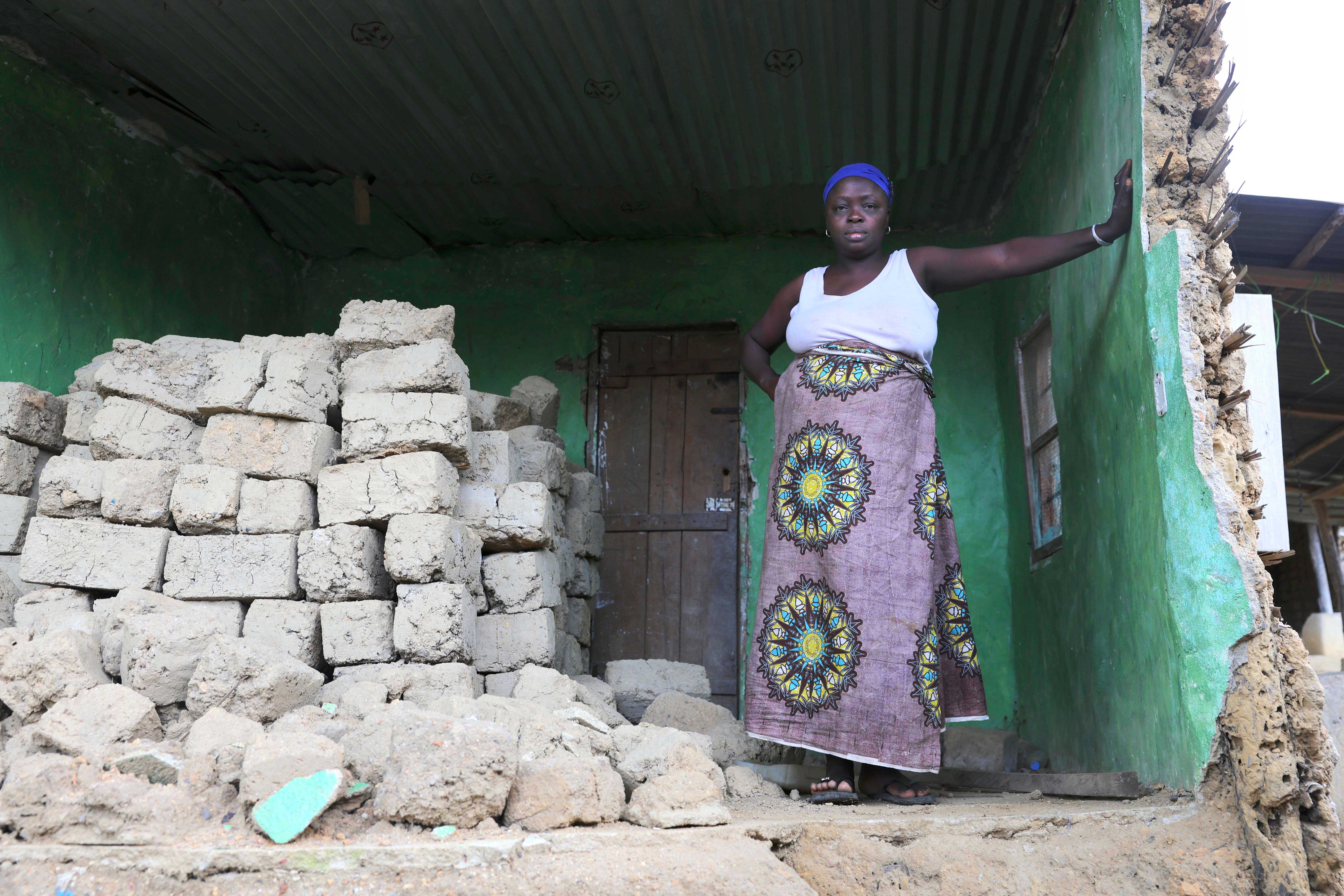
Bea Mountain did not reply to a letter seeking compensation, Manubah said.
“We are living in a warzone,” said elder Alexander Haines.
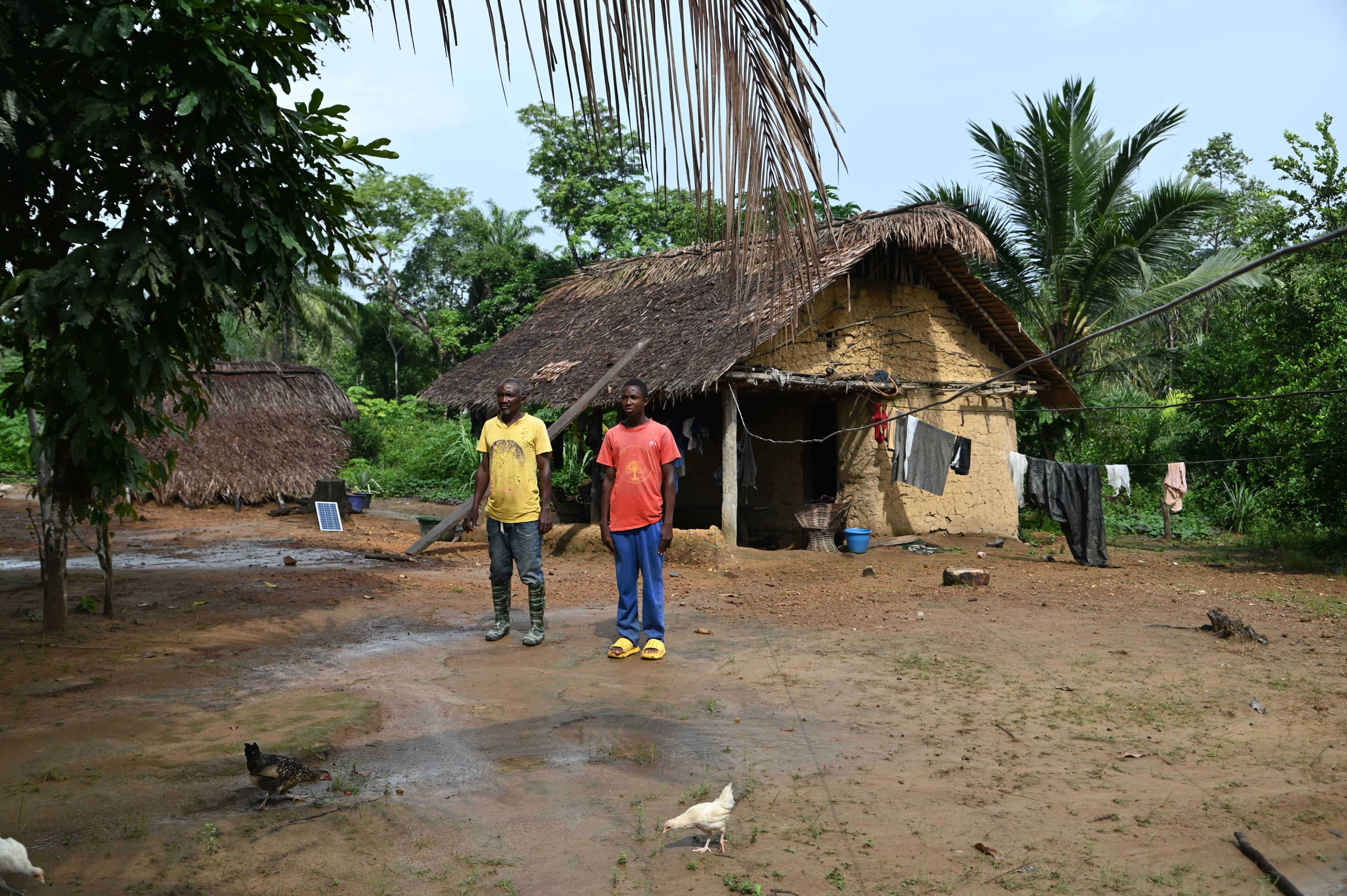
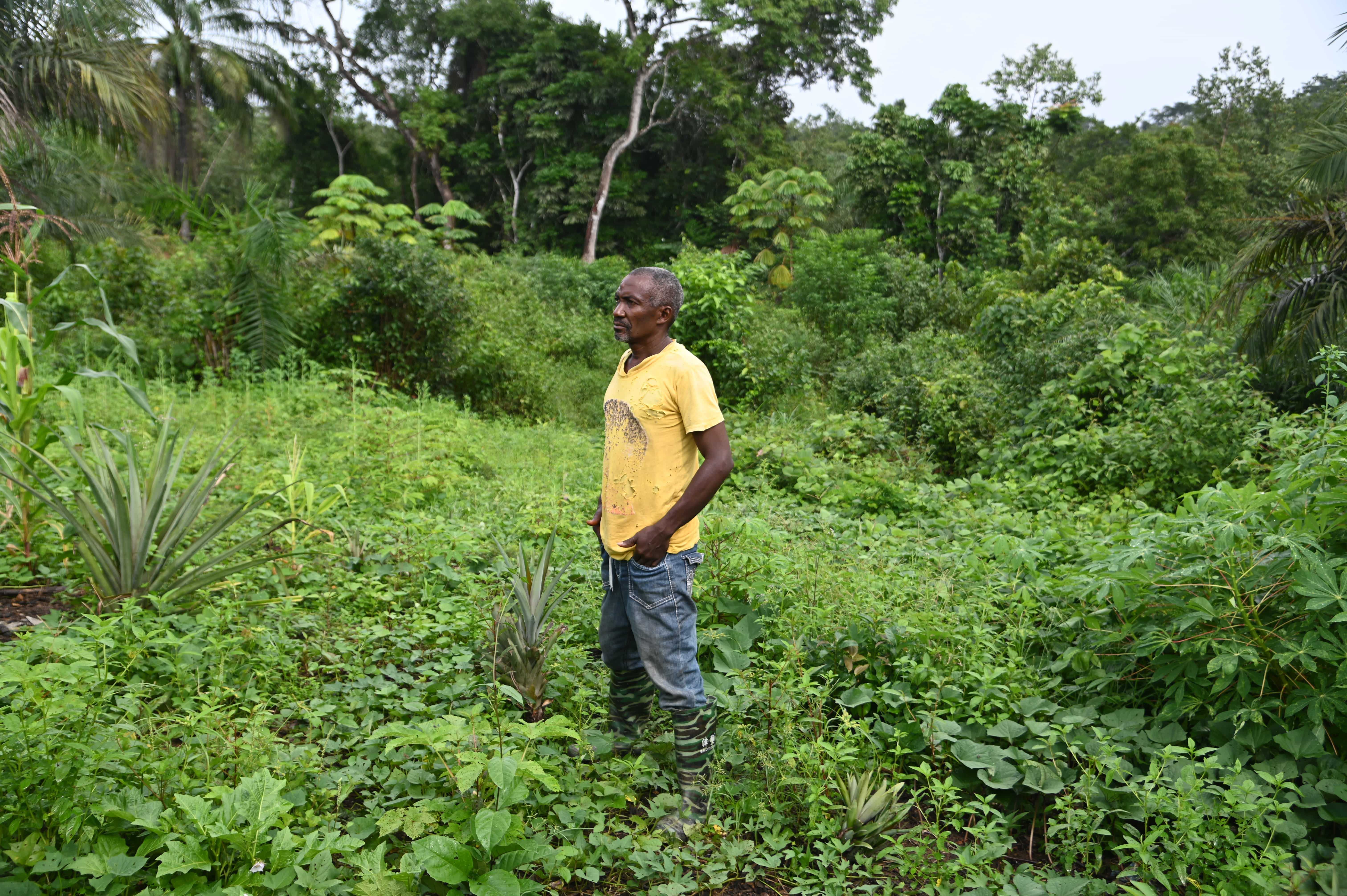
The mining has brought another disruption — endangered forest elephants driven from the forest and raiding crops. Flomo Zaza, a farmer in his late forties, has lived in the tiny village of Zaza, named for his family, since 1972. He described a “continuous elephant invasion.”
“Last year, the elephants came and ate all my rice I was about to harvest,” he recalled. “More than ten. They hollered at us.”
The villagers made noise to drive them off, to no avail, and the elephants destroyed corn, cassava and pumpkin crops.
“They ate everything,” said Zaza. “We don’t have any place to go. We are going to die if it continues.”
A 2024 study examining the invasion of forest elephants in the region documented an “unusual influx” starting in 2017, the year after Bea Mountain’s most important mine in the area, New Liberty, began commercial production.
It estimated that elephants had damaged crops worth $450,000 over six years, leaving more than 1,500 people facing hunger. The study identified deforestation and habitat loss caused by both loggers and Bea Mountain’s expansion, as well as vibrations and explosions from its mines, among the principal reasons elephants were being displaced onto farmland.
Polluted waterways are another persistent legacy of the company’s activities. In May 2022, the company spilled cyanide into local rivers, the EPA found. Levels of arsenic and cyanide were detected above legal limits for a month at a monitoring point downstream of the mine.
In Jikandor, Kinjor and Gogoima, villagers say the contamination means they can no longer fish. They suffer from upset stomachs and skin conditions that they attribute to Bea Mountain’s operations.
“The water we depend on, they polluted it,” said Victor Massaquoi, a youth leader in Gogoima. “We used to fish. Now you can’t.”
“It brings hardship.”
Two former senior Bea Mountain workers painted a picture of a company that systematically neglected communities on its doorsteps, exploiting government apathy.
Many villagers’ grievances are unaddressed by Bea Mountain, sometimes for years, said one. He said the company has “no systems, policy, procedures” for treating communities fairly.
The former workers claim there was no push within the company to do the right thing, while politicians did little to hold the company to account. Officials were “very, very lenient on the private sector.”
Education, healthcare and sanitation provided were all “very poor,” said the second worker.
“When I was at Bea Mountain, there’d be a shipment every week,” he said. “And the least they would ship was $11m in gold.”
“They take ounces of gold and leave the community to perish.”
Protests, they said, were inevitable.
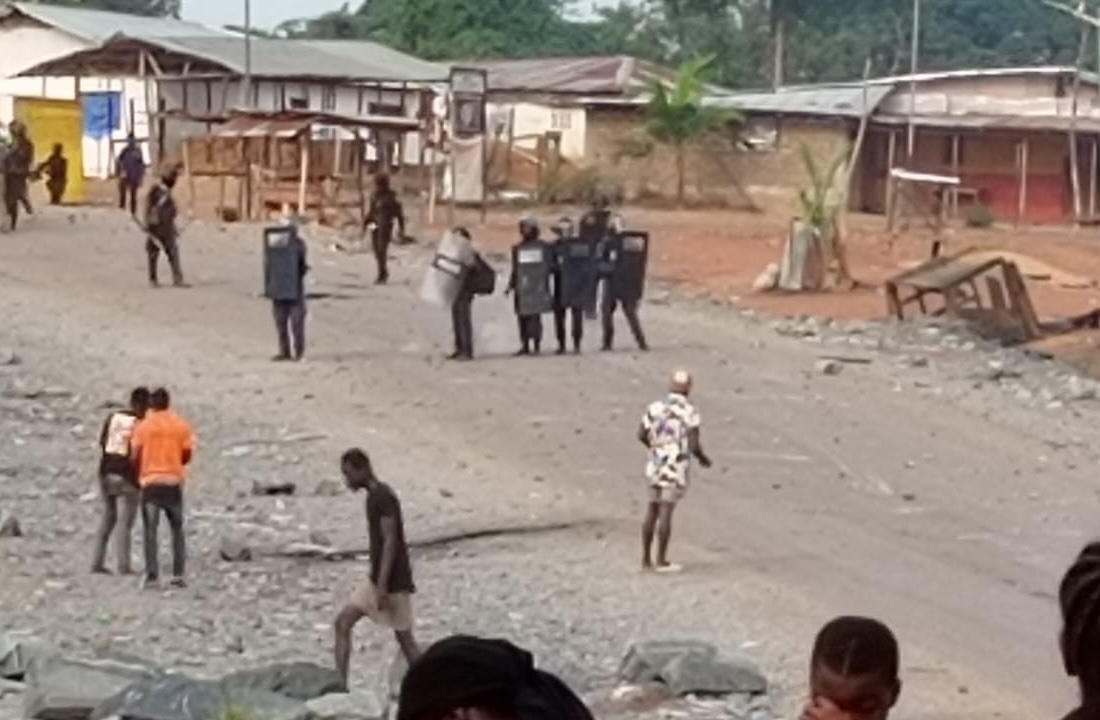
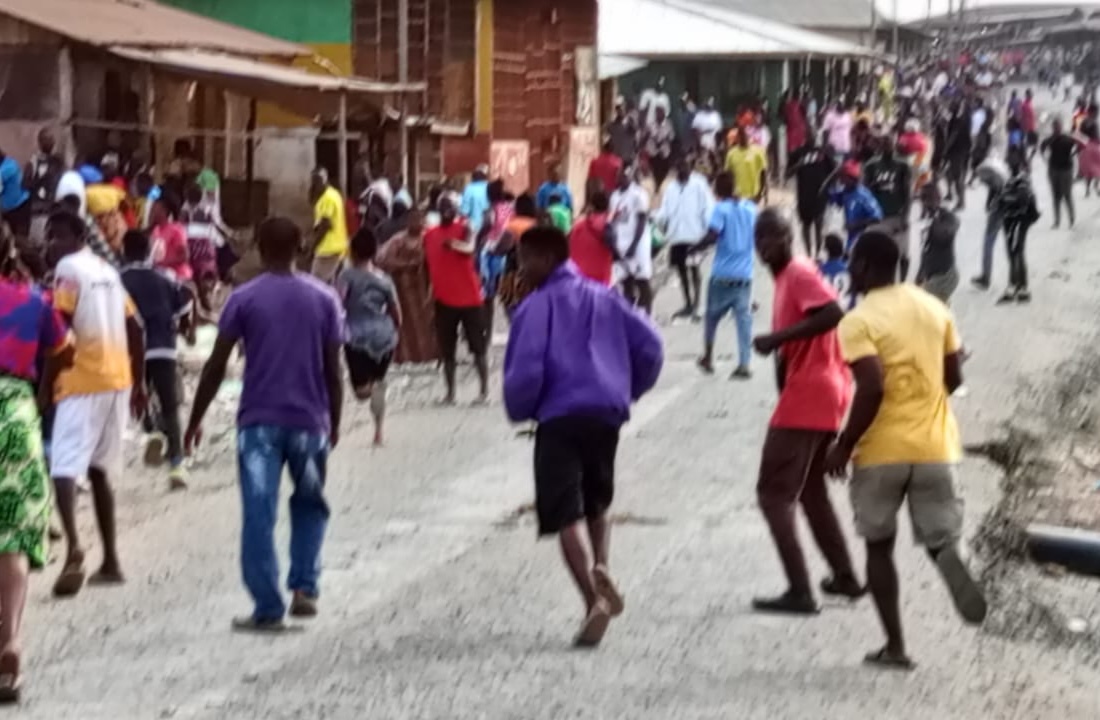
In early 2024, opposition to Bea Mountain over a litany of complaints — the water pollution, jobs and unfulfilled promises — reached boiling point in two villages.
In Gogoima, where Satta Surtual was struck with a gas canister; and nine miles away in Kinjor — with lethal consequences.
Protesters destroyed several Bea Mountain excavators, according to local news reports. The same police units that had put down protests in Gogoima launched tear gas and reportedly fired live rounds.
Smartphone videos show protesters surrounded by gas clouds by throwing stones, followed by gunshots. A police station was burned and 14 officers reportedly wounded.
In the final accounting, three people were dead.
Essah Massaley, 29, was among the victims. A solicitor launching a bid for compensation for his family has said he was not taking part in the protests, and was shot in the back as he tried to flee.
The morning of the disturbance, his mother, Fatama Massaley, asked him to return early from visiting his father to help her search for traditional medicine in the forest, then to play Ludo. The short trip would cost him his life.
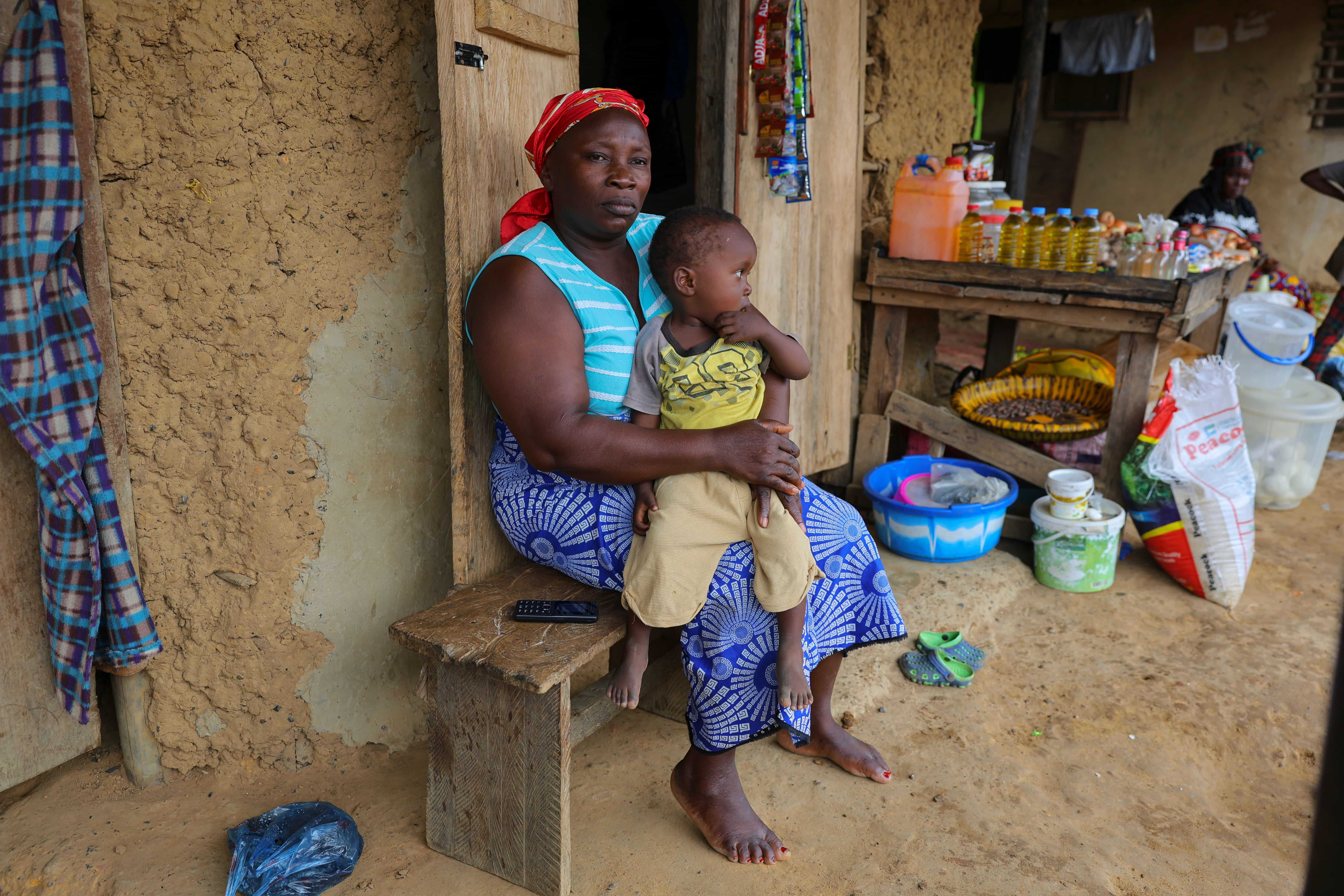
“When he left, I kept hearing gunshots,” Fatama recalled. “My heart leapt. Then my other son came running, and said ‘they [the police] shot Essah.’”
“He was strong and he was serious,” Fatama added, weeping as she sat in the doorway of her tiny shop. “Now I have nobody to help me.”
An investigation completed by the Liberian police two months after the protests concluded that their use of force had been justified, due to the violence of the protesters, according to local news reports. A civilian committee set up to review the conduct of police completed an investigation into the incident in January 2025, but has not made the findings public.
Liberia National Police spokeswoman Cecelia Clarke said all allegations of excessive police force in both Kinjor and Gogoima were “false and misleading.”
“At no time did the police engage in such acts,” she said.
MKS PAMP, the Swiss refiner that moves Bea Mountain’s gold to global markets, has said in a public statement that it considers the violence to be “outside of the mine’s scope of responsibility.”
In response to questions about the litany of social and environmental problems associated with the mine, MKS PAMP said that it had commissioned an independent expert to examine its operations in early 2025, and “found no basis” to stop buying Bea Mountain’s gold. The expert “found areas for improvement related to security, health and safety”, that MKS PAMP said it is monitoring.
An Nvidia spokesman said the company was committed to responsible sourcing. “We routinely review suppliers to ensure compliance with our responsible mineral policy and conduct due diligence to ensure our products are sourced responsibly,” he wrote. The company said it relies on independent auditors to carry out due diligence on suppliers and noted that MKS PAMP had been subject to a recent audit.
Apple did not reply to requests for comment.
Wilmot Paye, Liberia’s former mining minister, took a less bullish view than the police. Paye said he was “aware of many of the issues surrounding Bea Mountain and its operations,” and the “major incident of violence that resulted in the unfortunate loss of some innocent lives.”
Speaking before he left office, he said the ministry was “pushing harder for serious actions on compliance” and there was “no justification” for the social injustices and unfair practices confronted daily.
Under Liberia’s mineral law, the government can suspend or terminate licences if a miner doesn’t fulfil its obligations.
For now, it seems Bea Mountain’s operations are more likely to expand than be curtailed. The company is exploring new gold reserves in eastern Liberia — with familiar promises of healthcare, education and jobs for communities unaware of its legacy in the west of the country.
Read Cyanide River, the first instalment in this series, here. See also coverage by The Associated Press and Washington Post.
Read more reporting from The Gecko Project on The Politics of Deforestation & Critical Minerals.
Join The Gecko Project's mailing list to get updates whenever we publish a new investigation.
Reporting by Ed Davey
Editing by Tomasz Johnson
Fact-checking by Tomasz Johnson
Header Image of Hawa Massaley by Ed Davey for The Gecko Project.